
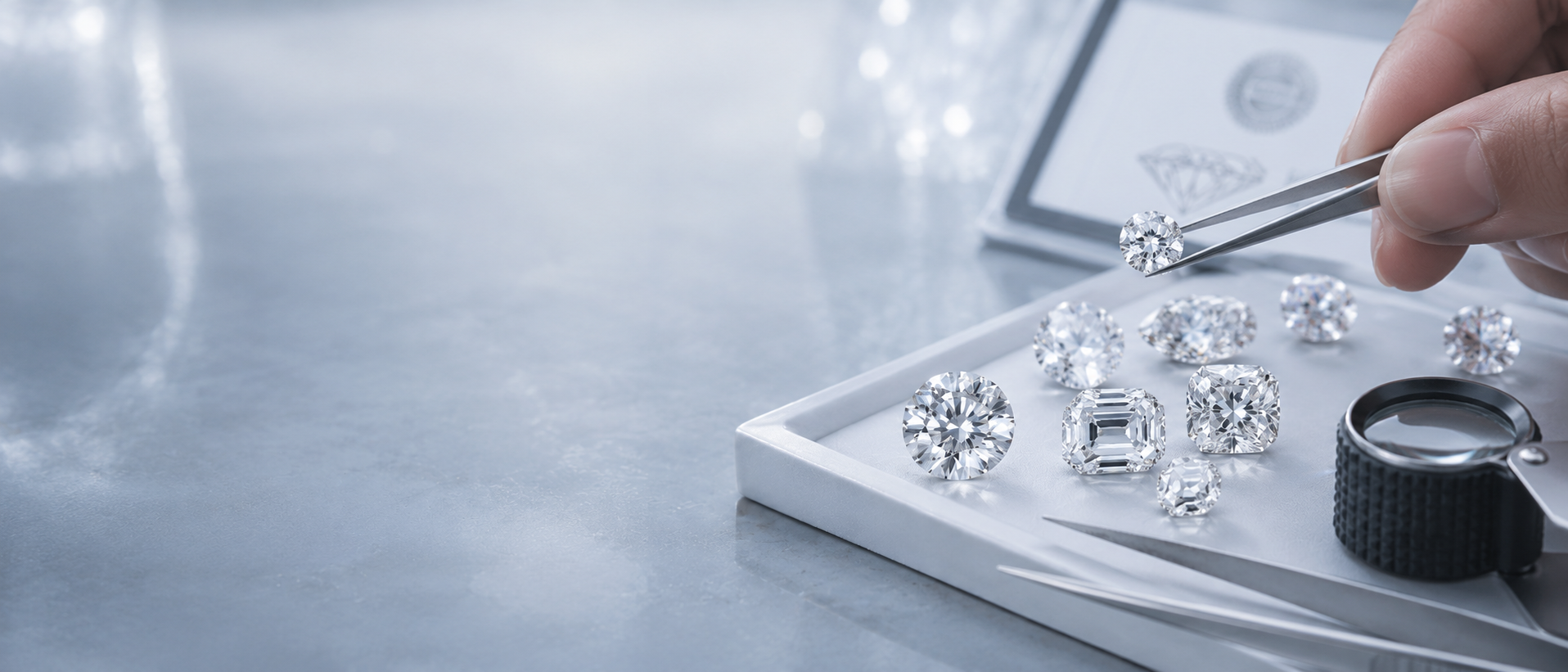
A Clear Guide to Diamonds, Lab Diamonds, and Gemstones
Choosing the right stone becomes easier when you understand shape, carat, color, clarity, origin, and design purpose. Use this guide to compare natural diamonds, lab-grown diamonds, fancy color diamonds, and gemstones with confidence.
Start with the Right Stone Type
Every project starts with a different priority: natural rarity, modern value, unique color, or vibrant gemstone character.
Natural Diamonds
Classic diamonds formed naturally over time, valued for rarity, brilliance, and timeless appeal.
Lab-Grown Diamonds
Modern diamonds with the same visual beauty, available in many sizes and often at attractive value.
Fancy Color Diamonds
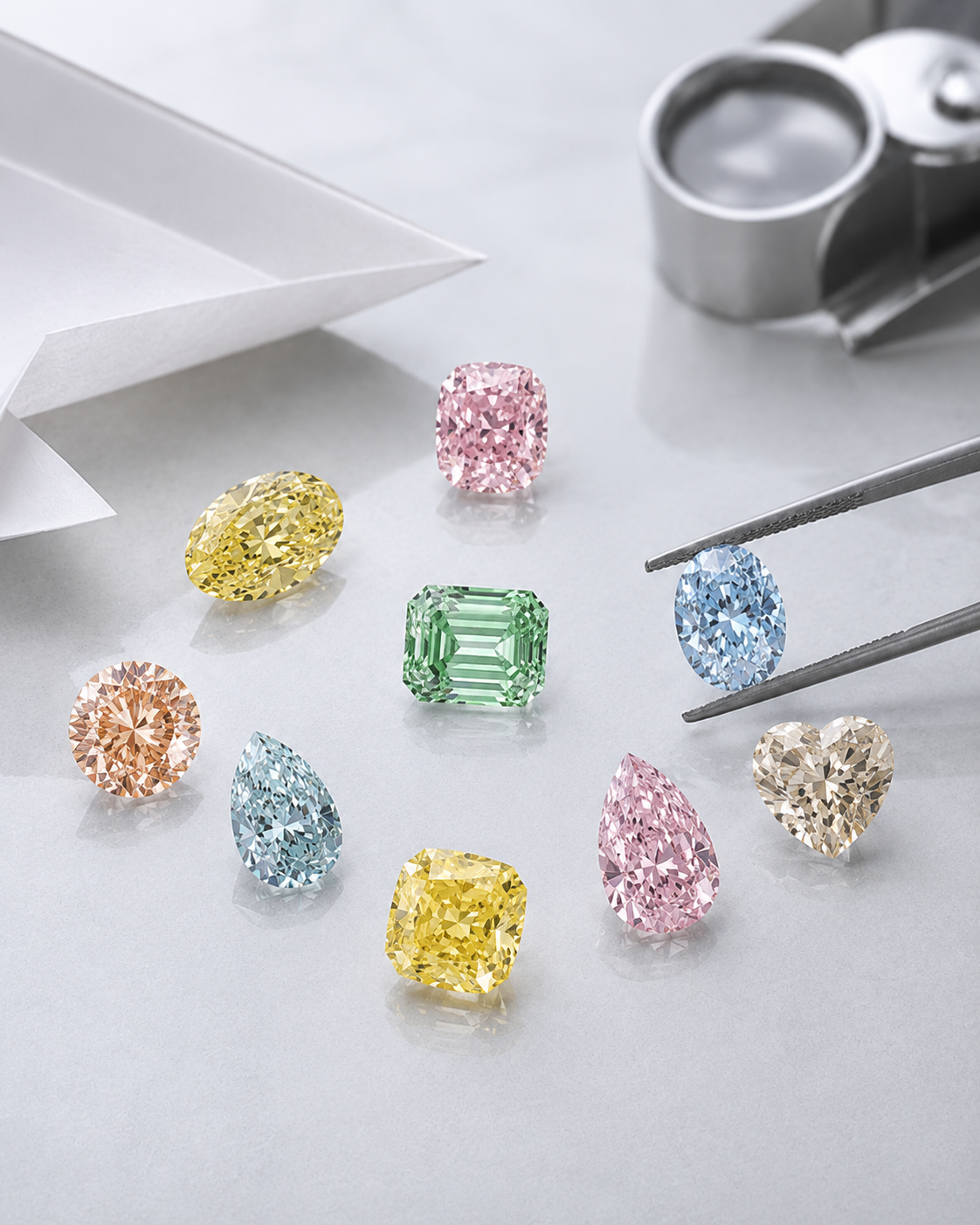
Diamonds with color personality, including yellow, pink, blue, green, champagne, and red tones.
Gemstones
Colorful stones such as ruby, sapphire, emerald, amethyst, citrine, opal, garnet, and topaz.
Understanding the 4Cs
The 4Cs help compare diamonds in a structured way. They are useful for natural and lab-grown diamonds alike.
Carat
Carat measures weight, not visual size only. Shape, cut, and proportions also affect how large a stone appears.
Cut
Cut affects brilliance, sparkle, and light performance. A well-cut stone can look brighter and more alive.
Color
White diamonds are graded by how colorless they appear. Fancy color diamonds are valued for color strength and tone.
Clarity
Clarity describes natural or internal characteristics. Many inclusions are not visible without magnification.
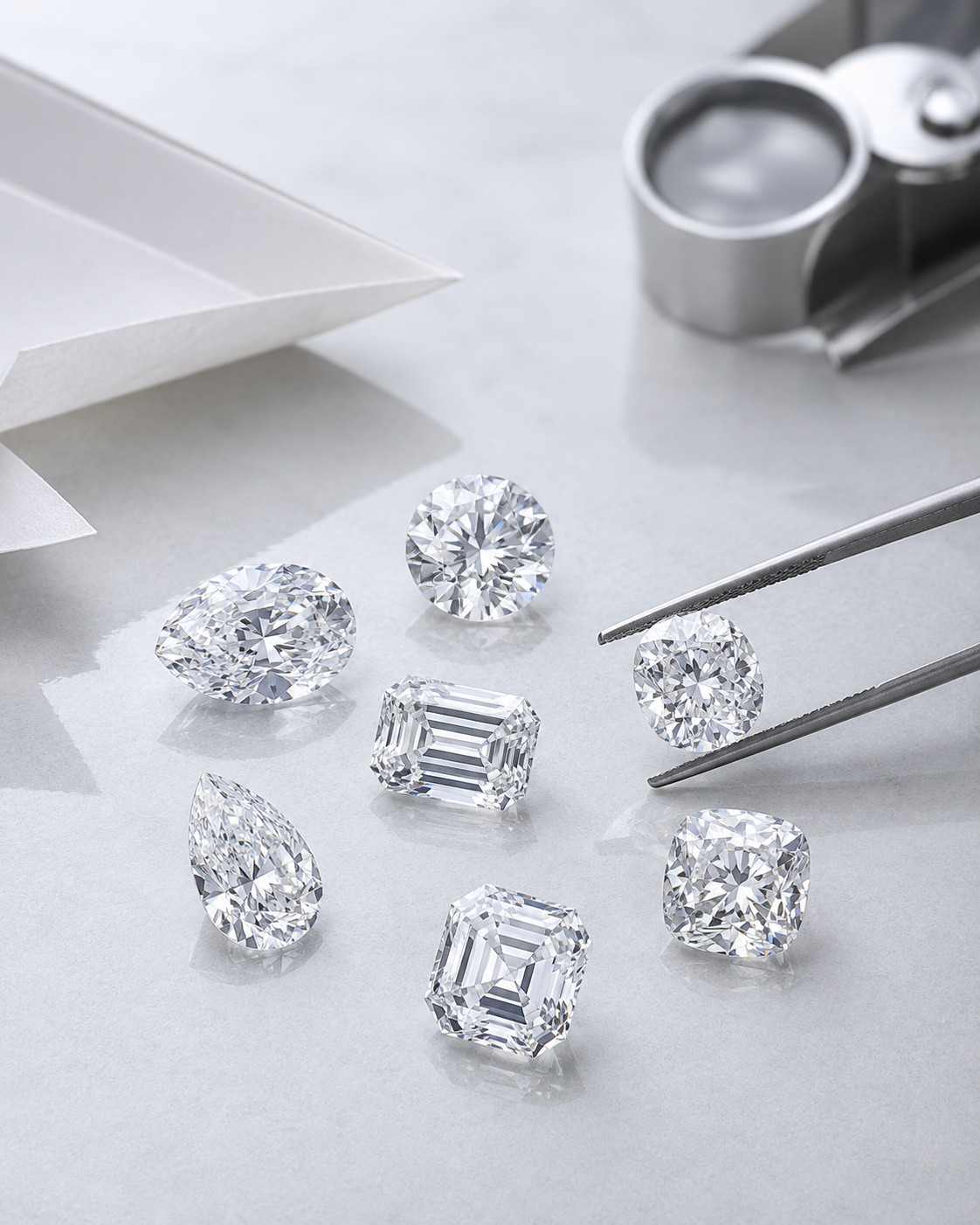
Natural vs Lab-Grown Diamonds
Natural diamonds and lab-grown diamonds can look very similar to the eye, but their origin is different. Natural diamonds are formed by geological processes, while lab-grown diamonds are created in controlled environments.
For buyers, the decision often depends on budget, size goals, origin preference, and the purpose of the jewelry. Lab-grown diamonds can be especially useful when you need matching stones, larger sizes, or consistent quality.
- Choose natural diamonds for rarity and traditional value.
- Choose lab-grown diamonds for size flexibility and modern value.
- For jewelry production, lab-grown diamonds are often practical for matching sets.
 Round
Round Oval
Oval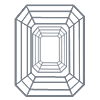 Emerald
 Cushion
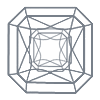 Radiant
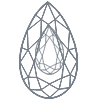 Pear
Pear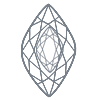 Marquise
 Princess
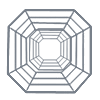 Asscher
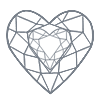 Heart
HeartChoosing the Right Carat Range
Carat selection depends on jewelry type, budget, and visual preference. A smaller well-cut stone can often look better than a larger poorly cut stone.
Fancy Color Diamonds
Fancy color diamonds are chosen for their color expression. Unlike white diamonds, where less color is usually preferred, fancy color diamonds are valued for attractive color tone, saturation, and visual character.
Yellow, pink, blue, green, champagne, and red diamonds can create distinctive jewelry with a strong design identity. The right choice depends on the mood of the piece: soft and romantic, bright and joyful, or bold and dramatic.
- Yellow and champagne tones feel warm and elegant.
- Pink and blue diamonds create a refined statement.
- Green and red tones are bold and highly distinctive.
Gemstones by Color and Character
Gemstones bring color, symbolism, and personality to jewelry. Each stone type has its own look, tradition, and design use.
Common Questions
Quick answers to help you compare stone options before you shop.
Are lab-grown diamonds real diamonds?
Yes. Lab-grown diamonds have the same diamond material and visual brilliance as mined diamonds, but they are created in a controlled laboratory environment rather than formed naturally underground.
Which diamond shape looks largest?
Elongated shapes such as oval, pear, and marquise often appear larger for their carat weight because of their length and surface coverage. Round diamonds remain the most classic and balanced choice.
What is more important: carat or cut?
Cut is extremely important because it affects sparkle and brightness. A well-cut smaller diamond can look more beautiful than a larger diamond with weak light performance.
How should I choose a gemstone?
Start with color, durability, and jewelry purpose. Some gemstones are better for everyday rings, while others are ideal for earrings, pendants, or occasional-wear jewelry.
Can I source a specific stone?
Yes. If you need a specific size, shape, color, or quality, share your requirements and we can help guide you toward suitable options.
Ready to Find the Right Stone?
Browse diamonds and gemstones by shape, size, color, and jewelry purpose — or contact us if you need help sourcing a specific stone.